

The important thing
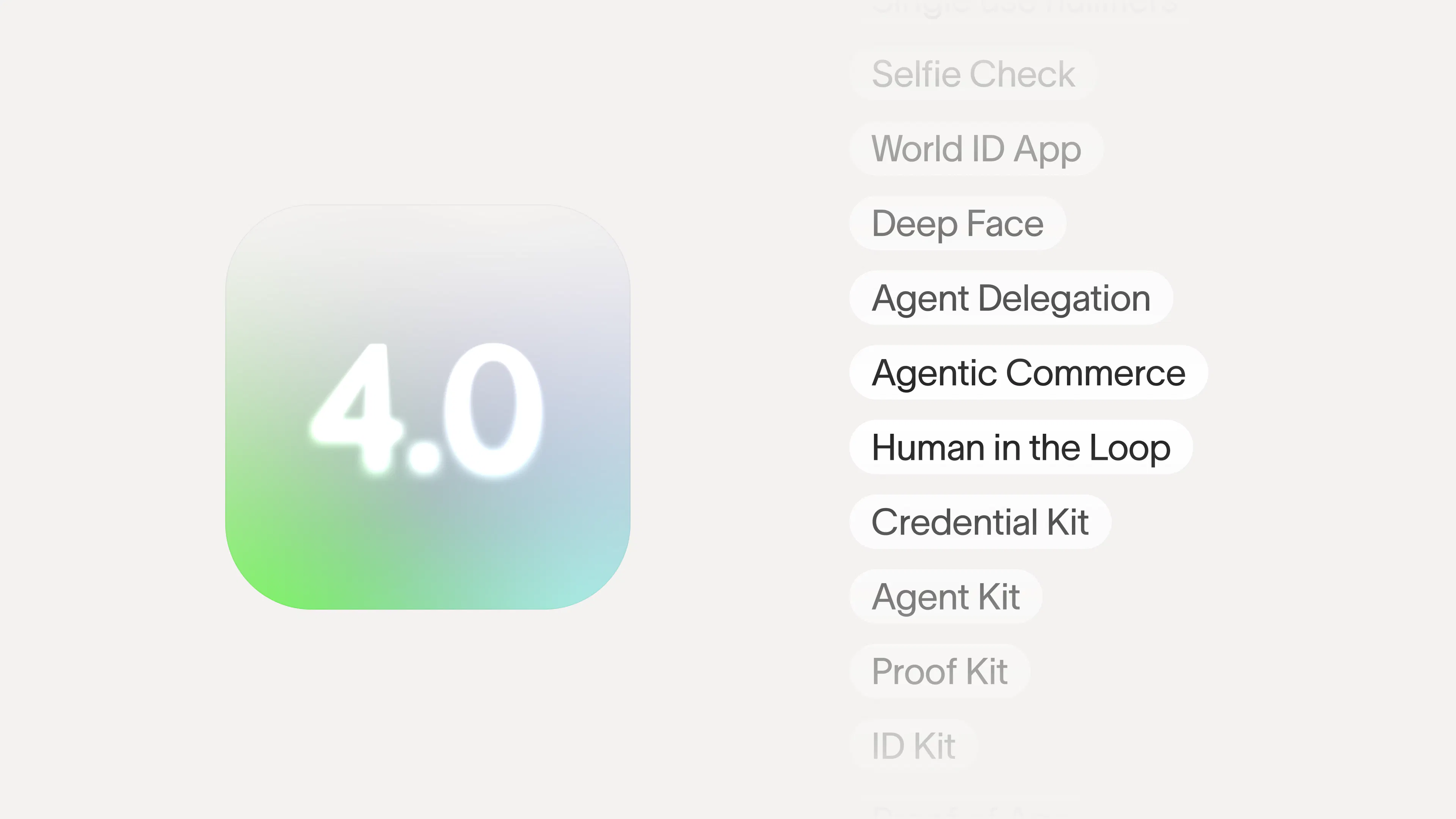
World announced a new stage within its global plan: Phase 3, focused on reaching critical scale and initial utility. For the community, this means a major change. The project no longer wants to be understood only by incentives, tokens or user registration, but by the real utility that World ID can offer on the Internet, applications, companies, events, digital platforms and experiences where demonstrating that a person is human will be increasingly necessary.
Key Points
For a long time, many people knew World for only one reason: WLD.
For some users, the first contact with the ecosystem was to download World App, verify their World ID, and receive tokens. For others, it was seeing the orb for the first time and wondering why a digital identity technology was generating so much conversation around the world.
But World has just put an important idea on the table: its next stage will not be defined solely by incentives.
It will be defined by utility.
On June 9, 2026, the World Foundation published The Simple Plan and Phase 3 of the real human network, a text where it explains that the project officially enters Phase 3 of its plan: to reach critical scale and initial utility.
Put simply: World wants to go from being a network that grew thanks to registrations, verifications and distribution of tokens, to becoming a useful infrastructure for daily digital life.
And that can change the way the community understands the project.
Why is World now talking about utility?
The main reason is the advancement of artificial intelligence.
The internet is entering a stage where it will become increasingly difficult to distinguish between a real person, a fake account, a bot, a deepfake or an automated agent. AI systems can now write, respond, shop, book, create images, imitate voices, and perform tasks previously only associated with humans.
How will we know if there is a real person behind a digital interaction?
Related subscriptions
World argues that this question will be central to the future of the Internet. That's why it presents World ID as a private test of humanity: a way to prove that someone is human and unique, without having to reveal more personal information than necessary.
In its publication, World explains that the network currently already has more than 18 million human credentials issued and more than 450 million uses of World ID globally.
Those figures show that World is no longer just talking about an experimental idea. It is trying to build a layer of trust for an Internet where artificial intelligence will be increasingly present.
The five phases of World's plan
World summarizes its strategy in what it calls “The Simple Plan”, a plan divided into five phases.
The first phase was to build a private test of humanity. The second was to launch and grow the network through ownership and participation with the WLD token. The third, which is the current stage, seeks to achieve critical scale and initial usefulness.
Then came two more stages: scaling even further through utility and decentralization, and finally reaching global scale to help bring the benefits of advanced AI systems to all humans.
But the important thing for the community today is Phase 3.
Because this stage marks a change in mentality.
World is no longer just saying “join the network”. Now he's trying to answer, "What's the point of being in the network?"
Related subscriptions
From receiving WLD to using World ID
During Phase 2, incentives played an important role. World acknowledges that the token helped initiate the adoption and participation of millions of people.
According to the blog, approximately 16 million people with verified World IDs have claimed WLD, and collectively eligible users have received more than 900 million WLD through grants and referral rewards.
However, Phase 3 points to another model.
Growth will no longer depend primarily on rewards for signing up or participating. World affirms that, going forward, the network will grow due to the usefulness of products, services and experiences powered by World ID.
This means that for many users, the value of World could start to be felt in new ways: by accessing an exclusive experience, proving that an account is real, avoiding bots at events, protecting digital interactions, or participating in platforms where being a verified human provides concrete benefits.
The message is clear: World ID wants to stop being just an initial verification and become an everyday tool.
World ID for people: trust in apps, events, and communities
One of the most important approaches of Phase 3 is the use of World ID for people.
World mentions cases such as dating platforms, video games, concert tickets and digital communities where authenticity matters. The problem is well known: fake profiles, bots, duplicate accounts, automated reselling, fraud, and increasingly unreliable digital experiences.
In that context, a humanity test can help certain platforms work better.
For example, World mentions its integration with Tinder, where World ID can serve as a private way to confirm that behind a profile there is a real person. It also presents Concert Kit, a tool designed for artists to book tickets for verified humans and reduce the impact of bots that buy tickets before real fans.
For the community, this is important because it shows a change in the use of World ID.
It's no longer just about opening World App or receiving a token. The idea is that verified human identity can be used in digital experiences that people already understand: appointments, concerts, games, social networks, communities and consumer platforms.
World ID for Business: Fraud and Impersonation Protection
World also wants to bring its proof of humanity to companies.
The reason is simple: artificial intelligence is making it easier to impersonate. False voices, generated videos, deepfakes and automated attacks can affect meetings, document signatures, internal processes, customer service and sensitive operations.
World mentions integrations and working with companies like Zoom, Docusign, and Outtake to bring proof-of-humanity technology to live communication, document signing, and digital interactions where it's important to know that a real person is present.
This does not mean that all companies will adopt World ID immediately. But it does show where the strategy is headed: turning proof of humanity into an additional layer of trust for organizations facing fraud, malicious automation, or impersonation.
In simple terms, World wants World ID to be useful not only for individual users, but also for institutions, platforms, and services that need to know when an interaction is coming from a human.
World ID for AI Agents: Humans and Machines Working Together
One of the most interesting points of the blog is the idea of World ID for artificial intelligence agents.
More and more tools will allow users to delegate tasks to AI agents: search for information, make purchases, book services, manage processes, execute instructions or interact with platforms on behalf of a person.
How can a platform know if an agent is really acting with the authorization of a human?
Related subscriptions
World states that World ID can help in such scenarios through tools such as AgentKit, which would allow connecting actions of agents with verified humans, request human approval for sensitive tasks and create new standards of trust in automated interactions.
To the general community, this may sound far away, but it will probably become increasingly common.
In the future, many people will not only browse the internet directly. They will also use assistants, agents, and automated systems to do things for them. The humanity test could serve to confirm that behind those actions there is a real person making decisions or authorizing processes.
Less growth by global presence, more growth by density and real use
One of the most important changes in the listing is in the operational part.
World explains that it will adjust its physical presence to focus on countries and cities where there is greater utility, adoption, density and integrations. In other words, the project will no longer seek only to reach many places at the same time, but to concentrate where it can build more complete and useful experiences.
According to the blog, in the United States the focus will be on San Francisco and New York. Outside the United States, World mentions the United Kingdom, Germany, Japan and South Korea as priority markets.
There is also talk of an evolution in hardware. World is looking to make the next generation of orbs more self-service, with some devices placed directly within partner businesses. The goal mentioned by World is for 95% of the orbs to operate under a self-service model by the end of 2026.
This point is important because it may explain why some communities might notice changes in availability, local presence, or forms of verification.
World is prioritizing efficiency, utility, and focus. That can strengthen the experience in certain markets, but it also means that other regions could depend more on how the self-service model evolves, new operators, or future expansions.
What does this mean for the community?
For the community, Phase 3 can be summed up in one sentence:
World wants World ID to do more than just sign up.
Related subscriptions
That can have several consequences.
The first is that ecosystem value could increasingly depend on the actual apps, partnerships, and experiences available to verified users. If World ID is integrated into more platforms, the user could find benefits beyond World App.
The second is that incentives with WLD might no longer be the center of the conversation. World does not eliminate the role of the token, but it does make it clear that future growth will be more related to utility than rewards.
The third is that the community will have to carefully observe where and how this utility is deployed. It's one thing to have millions of verified users; it's quite another for those people to be able to use their World ID in everyday services, local platforms, events, games, financial applications, or artificial intelligence tools.
That will be the real test of this stage.
The opportunity for projects built in World
This new strategy also opens an important door for apps and communities that are already building on World.
If World wants to grow by utility, then projects that generate real use for verified people will become increasingly relevant. Games, financial tools, rewards, communities, news, identity, commerce, local events and experiences can become part of that new layer of value.
It's not just about creating technology for the sake of creating technology.
What can a verified person do that they couldn't do before?
Related subscriptions
That will probably be one of the most important questions for the World community over the coming months.
A necessary change, but also a test
Phase 3 comes at a key time.
Artificial intelligence is advancing fast. Trust in the Internet becomes more fragile. Platforms face bots, fraud, spam, impersonation, and manipulation. At the same time, millions of people are already part of World and expect that belonging to translate into useful experiences.
Therefore, the shift towards utility makes sense.
But it will also be a test.
World will have to prove that its technology can solve real problems without sacrificing privacy, accessibility, or trust. It should also clearly explain its operational changes, especially to communities that could be affected if the physical presence of the project changes in their cities or countries.
Utility is not decreed. It is demonstrated.
Related subscriptions
The moment of Proof of Human
For years, “Proof of Human” may have sounded like a futuristic idea. Today it starts to feel like a more concrete need.
If the internet is filled with artificial intelligence, fake accounts, autonomous agents, and synthetic content, people will need new ways to prove they're still people. Not to hand over all your information, but to participate with greater confidence in digital spaces where authenticity matters.
World is betting that World ID can become one of those tools.
Phase 3 does not guarantee that everything will work as planned. World's own blog warns that the functions, integrations and projections described may change and should not be taken as definitive promises.
But it does make the course clear.
World wants to move from the initial adoption stage to a real utility stage.
And for the community, that means the most important question will no longer be just how much WLD can be received.
The question will be what can we build, use and improve when the Internet needs to know that there is still a human on the other side.
Community reaction
Reader responses are moderated for relevance, sourcing, and civility. Expert comments from verified professionals are elevated with context.